Email List Cleanup: How to Improve Deliverability and Open Rates
A healthy email list is one of the most valuable assets in digital marketing. While many businesses focus on growing their subscriber count, maintaining list quality is equally important. Over time, email lists naturally accumulate inactive subscribers, invalid addresses, and contacts who no longer engage with your content.
Regular email list cleanup helps improve deliverability, increase engagement, and ensure your marketing efforts reach the people most likely to respond.
What Is Email List Cleanup?
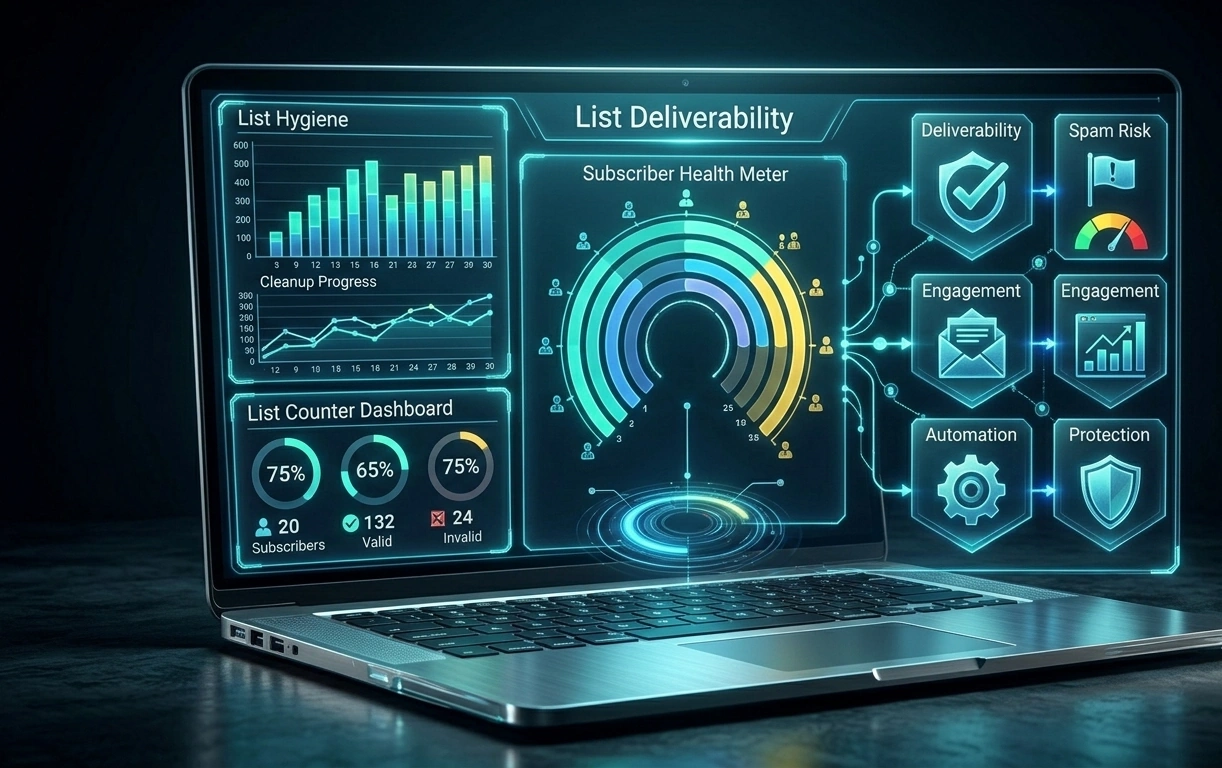
Email list cleanup, also known as list hygiene, is the process of identifying and removing inactive, invalid, or unengaged contacts from your email database.
The goal is to maintain a high-quality subscriber list that consists of people who genuinely want to receive your emails and interact with your content.
Common contacts removed during a cleanup include:
- Invalid email addresses
- Hard bounces
- Inactive subscribers
- Duplicate contacts
- Spam complaints
- Unsubscribed users
Why Email List Cleanup Matters
Email service providers evaluate sender reputation based on subscriber engagement and list quality.
When a large percentage of recipients ignore your emails, mailbox providers may assume your content is unwanted, reducing inbox placement and affecting future campaigns.
Regular list maintenance can help:
- Improve deliverability
- Increase open rates
- Reduce bounce rates
- Lower spam complaints
- Improve sender reputation
- Enhance overall campaign performance
A smaller, engaged audience often delivers better results than a large inactive list.
Signs Your Email List Needs Cleaning
You may need an email list cleanup if you notice:
- Declining open rates
- Lower click-through rates
- Increased bounce rates
- Rising spam complaints
- Poor campaign performance
- Large numbers of inactive subscribers
These indicators often suggest that list quality has declined over time.
How Often Should You Clean Your Email List?
The ideal frequency depends on your sending volume and audience size.
General recommendations include:
- Every 3–6 months for most businesses
- Monthly reviews for high-volume senders
- Ongoing monitoring of engagement metrics
Regular maintenance helps prevent deliverability issues before they become serious problems.
5 Steps to Clean Your Email List
1. Remove Invalid Email Addresses
Hard bounces occur when emails cannot be delivered due to invalid or non-existent addresses.
These contacts should be removed promptly to protect sender reputation.
2. Identify Inactive Subscribers
Review engagement data and locate subscribers who have not opened or clicked emails within a defined period.
Many businesses use a timeframe of:
- 90 days
- 120 days
- 180 days
depending on their sending frequency.
3. Run a Re-Engagement Campaign
Before removing inactive subscribers, send a re-engagement email asking whether they would like to remain on your list.
This provides subscribers with an opportunity to reconnect before being removed.
4. Remove Unresponsive Contacts
If subscribers remain inactive after your re-engagement efforts, consider removing them from your active marketing list.
This helps improve engagement metrics and list quality.
5. Verify New Subscribers
Implement email verification and double opt-in processes to help maintain list quality from the start.
This reduces the likelihood of fake or invalid addresses entering your database.
Benefits of a Clean Email List
Businesses that perform regular list maintenance often experience:
- Higher open rates
- Better click-through rates
- Improved deliverability
- Stronger sender reputation
- Reduced marketing costs
- More accurate reporting
Focusing on engaged subscribers creates a stronger foundation for long-term email marketing success.
Quality vs. Quantity
A common misconception is that larger email lists automatically produce better results.
In reality, engagement matters more than list size.
An audience of 1,000 engaged subscribers can often outperform a list of 10,000 inactive contacts because engaged readers are more likely to:
- Open emails
- Click links
- Make purchases
- Share content
- Build long-term relationships with your brand
Quality subscribers provide far greater value than inactive contacts.
Best Practices for Ongoing List Management
To keep your email list healthy:
- Use double opt-in forms
- Monitor engagement regularly
- Remove hard bounces promptly
- Segment inactive subscribers
- Run periodic re-engagement campaigns
- Maintain accurate subscriber data
Consistent list management helps protect deliverability and improve campaign performance over time.
Final Thoughts
Email list cleanup is an essential part of any successful email marketing strategy. Maintaining a healthy subscriber database helps improve engagement, strengthen sender reputation, and ensure your messages reach the inbox rather than the spam folder.
Rather than focusing solely on growing your list, prioritize subscriber quality and engagement. A clean, active audience will always provide better long-term results than a large list filled with inactive contacts.
Frequently Asked Questions
Does email list cleanup improve open rates?
Yes. Removing inactive subscribers often increases overall open rates because your emails are being sent to a more engaged audience.
Can inactive subscribers affect deliverability?
Yes. Low engagement signals can negatively impact sender reputation and inbox placement.
How often should I clean my email list?
Most businesses should review their lists every three to six months, while high-volume senders may benefit from more frequent maintenance.
What is a re-engagement campaign?
A re-engagement campaign is a series of emails designed to encourage inactive subscribers to interact with your content before they are removed from your list.